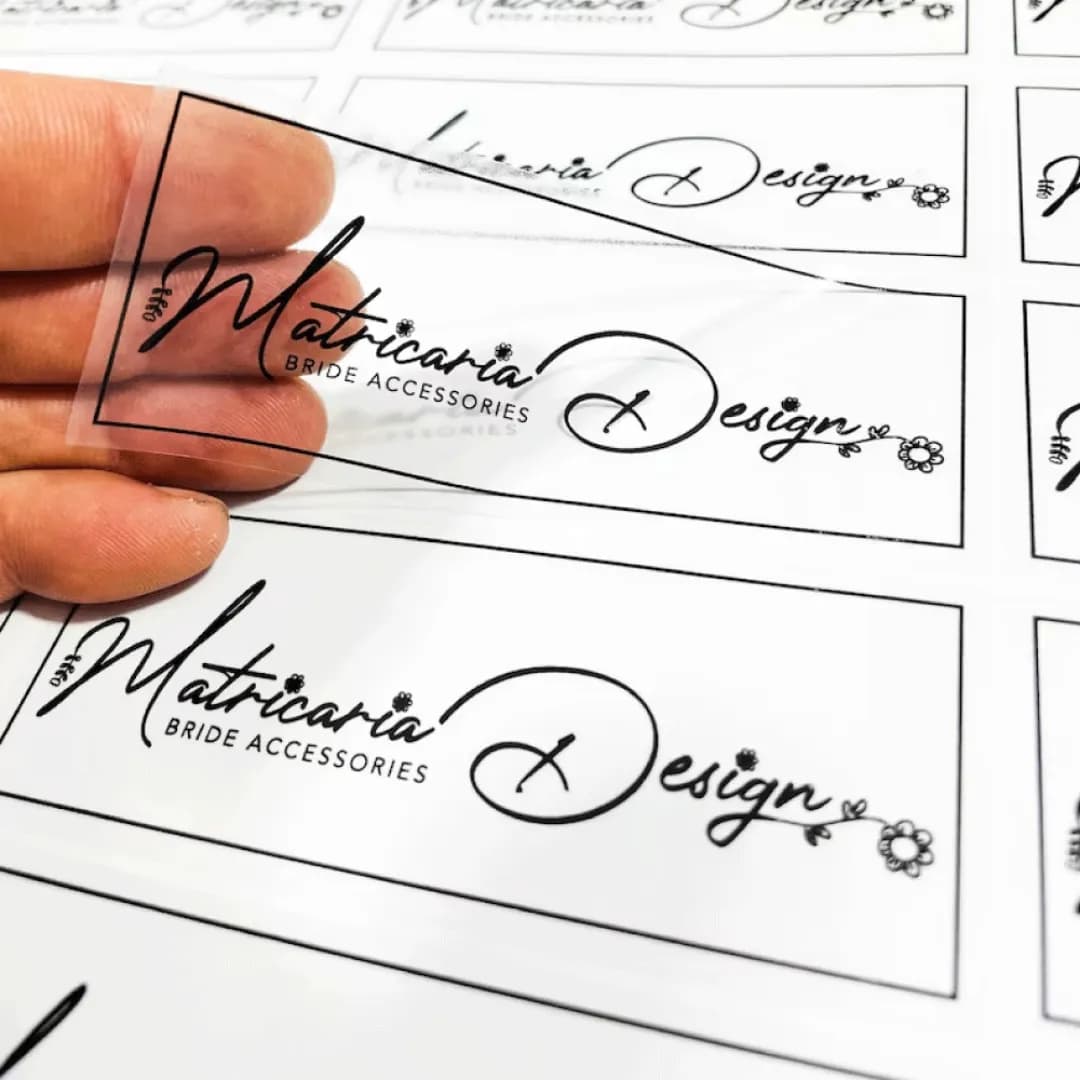
The sticker that disappears into the design. GRAFIQ's transparent gumming stickers and labels are rated 4.9 stars by 162 verified customers and are built for brands whose visual identity is strong enough to stand without a background. The clear transparent film is invisible once applied — only the printed design is visible, appearing as though the artwork is printed directly onto the surface of the jar, bottle, box, or package. No white border. No rectangular background. Just the design, on the surface.
Choose from Rectangle, Square, Circle, Oval, or Custom Shape die-cut to any outline. Preset sizes from 2×1 inch to 6×4 inch, or any custom dimension. Quantity-based pricing with automatic discounts. Shipping included.
The choice of skincare brands, artisan food producers, beverage labels, D2C packaging designers, and gift businesses. Order now — the label that lets your packaging speak for itself.
I have my design ready and will upload it
Our expert designers will create custom designs for you
| Message | Invalid Shape Type |
The sticker that disappears into the design. GRAFIQ's transparent gumming stickers and labels are rated 4.9 stars by 162 verified customers and are built for brands whose visual identity is strong enough to stand on its own — without a white border, without a rectangular background, without any material that competes with the design. The transparent base film is invisible once applied: only the printed design is visible, appearing as though the artwork is printed directly onto the surface of the jar, bottle, box, or package it is applied to. The result is a no-label look that communicates premium brand confidence and visual restraint in equal measure. Printed using advanced machines for sharp detail and accurate colour output at every order quantity.
Transparent stickers work by removing the visual boundary between the label and the product surface. On a clear glass bottle, the design appears to float directly on the glass. On a kraft paper box, the label blends with the packaging material. On a white ceramic jar, the logo appears applied rather than labelled. This material-product integration is the design effect that premium D2C brands, artisan food producers, and luxury personal care labels use to elevate the perceived quality of their packaging — the absence of a white background signals that the brand has thought carefully about every element of the product presentation. The adhesive backing ensures the sticker holds firmly on glass, plastic, cardboard, and metal surfaces through standard handling and mild moisture exposure.
Choose from Rectangle, Square, Circle, Oval, or fully Custom Shape die-cut to any outline. Preset sizes from 2×1 inch to 6×4 inch, plus any custom dimension. Quantity-based pricing with automatic discounts as order size increases. Shipping included. Production time varies by shape and quantity.
4.9 stars from 162 verified customers — a near-perfect quality rating: A 4.9-star average across 162 verified orders confirms that the transparent gumming sticker delivers exactly what a brand needs from a no-label finish: a clear base that is truly clear, a print that is sharp and accurate, and an adhesive that holds without visible edge or lifting. For a material that relies entirely on visual precision — any haze, any milkiness, any misregistration in the print is immediately obvious — a 4.9-star rating is the quality assurance that matters most before placing an order.
No-label look — the design on the surface, nothing else: The defining quality of a transparent sticker is that the label itself is invisible. Unlike a white, cream, or coloured paper or vinyl sticker, the transparent base film does not add any background to the design — it carries the design to the surface and then disappears. The practical effect is that a logo, product name, or decorative graphic appears applied directly to the jar, bottle, or packaging surface, without the rectangular or circular white border that marks the boundary of a conventional label. For brands whose packaging design depends on the product surface being part of the visual, transparent stickers are the only label format that achieves this effect.
Premium positioning through material restraint: In brand design, the choice to use a transparent label communicates a level of design sophistication that is immediately perceptible to a design-literate audience. It says the brand has considered not just what the label says but what the label does to the packaging surface — and has chosen a format that subtracts rather than adds. For skincare brands targeting premium retail, artisan food labels destined for gift packaging, and D2C brands whose product photography is central to their marketing, the no-label look is the label choice that signals premium intent without requiring foil, embossing, or coating.
Versatile surface compatibility — glass, plastic, cardboard, metal: Transparent gumming stickers adhere cleanly to the widest range of product surfaces in the sticker range. On glass, the transparency maximises: the design appears to be part of the glass surface. On plastic — bottles, pouches, sleeves — the label integrates with the packaging without adding visual weight. On cardboard and kraft paper, the transparent base takes on a slight warmth from the underlying material, making the design appear printed on the packaging itself. This surface versatility makes transparent stickers the most adaptable label format for brands with multiple packaging types.
Custom die-cut to any shape — the label outline is the design: The custom shape option allows transparent stickers to be cut to the exact outline of the design — a logo shape, a leaf, a circle with a decorative border, or any other form. On a transparent base, the die-cut shape is especially effective: with no white border to signal the edge of the label, the cut outline is the only visible boundary of the sticker, making the die-cut shape itself a design element. A custom-shape transparent sticker cut to the exact form of a brand logo applied to a clear glass bottle is one of the most premium label presentations available at a standard sticker price point.
Skincare, serum and personal care brands with clear or minimal packaging: Premium skincare brands that invest in glass bottles, clear plastic tubes, and minimalist packaging rely on transparent labels to maintain the visual integrity of the packaging design. A transparent sticker carrying only the brand logo and product name on a glass serum bottle communicates the same restraint and quality as the product formula itself. The no-label look is the standard label format for brands whose packaging positioning is built on clarity, minimalism, and material honesty.
Artisan food brands — jams, honey, sauces, oils, and specialty beverages: Artisan food producers who package in glass jars and bottles use transparent labels because the product itself is part of the packaging design — the colour and texture of the jam, honey, or sauce visible through the glass is a quality signal. A transparent label applied to a glass jar with amber honey or deep red jam allows the product to be seen through the label area, rather than hiding it behind an opaque paper or vinyl background. The label adds the brand identity without subtracting the product visibility that communicates quality and craft.
D2C brands building premium unboxing experiences: For brands selling through direct-to-consumer channels where packaging photography is a core marketing asset, transparent stickers serve both a functional and aesthetic purpose. Applied to tissue paper, box interiors, product sleeves, or packaging seals, a transparent sticker with a brand logo is visible as a design element without adding the visual weight of an opaque label. Product photography with transparent stickers produces cleaner, more intentional packaging imagery — which is why they are a preferred label format for brands whose Instagram and website aesthetics depend on minimalist, editorial product shots.
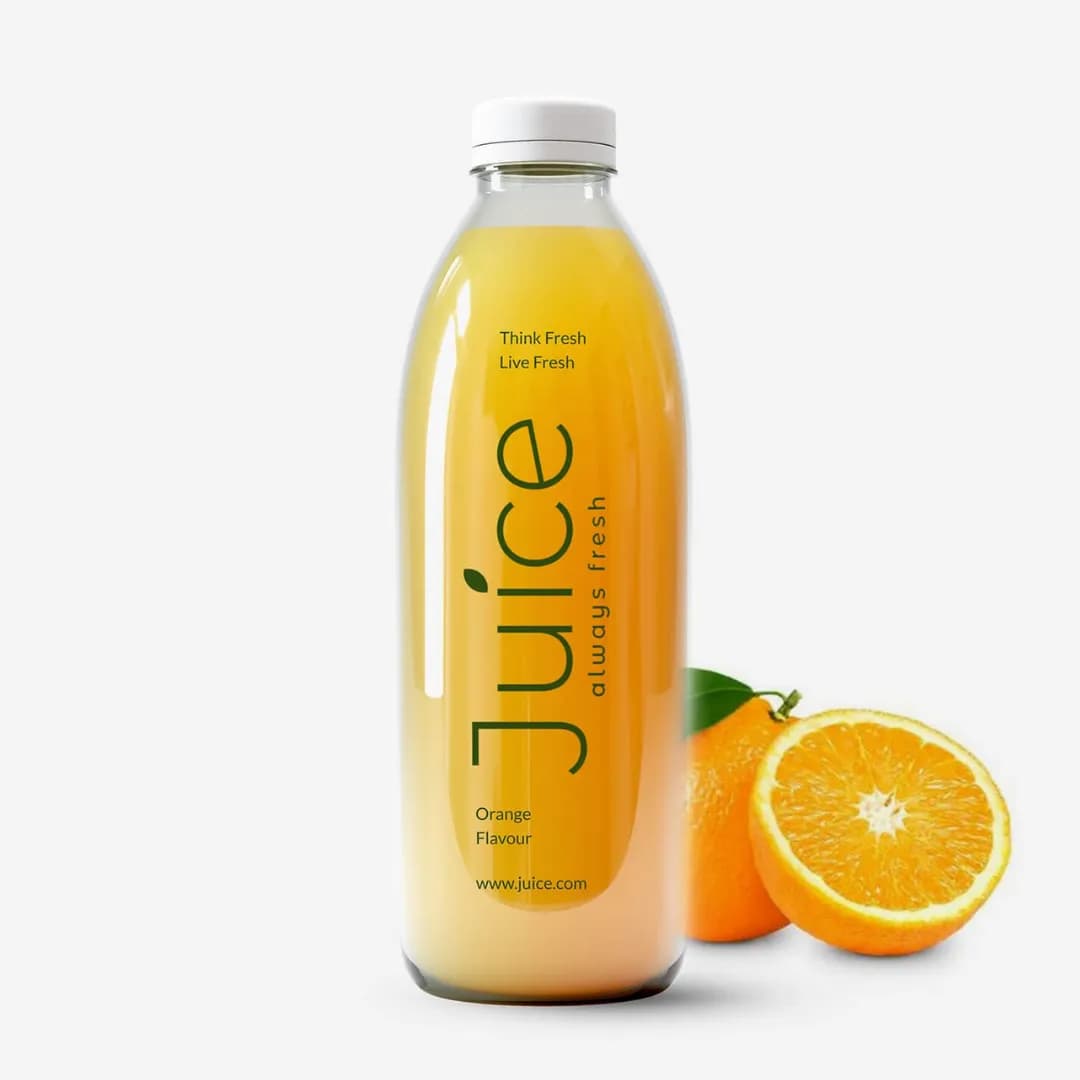
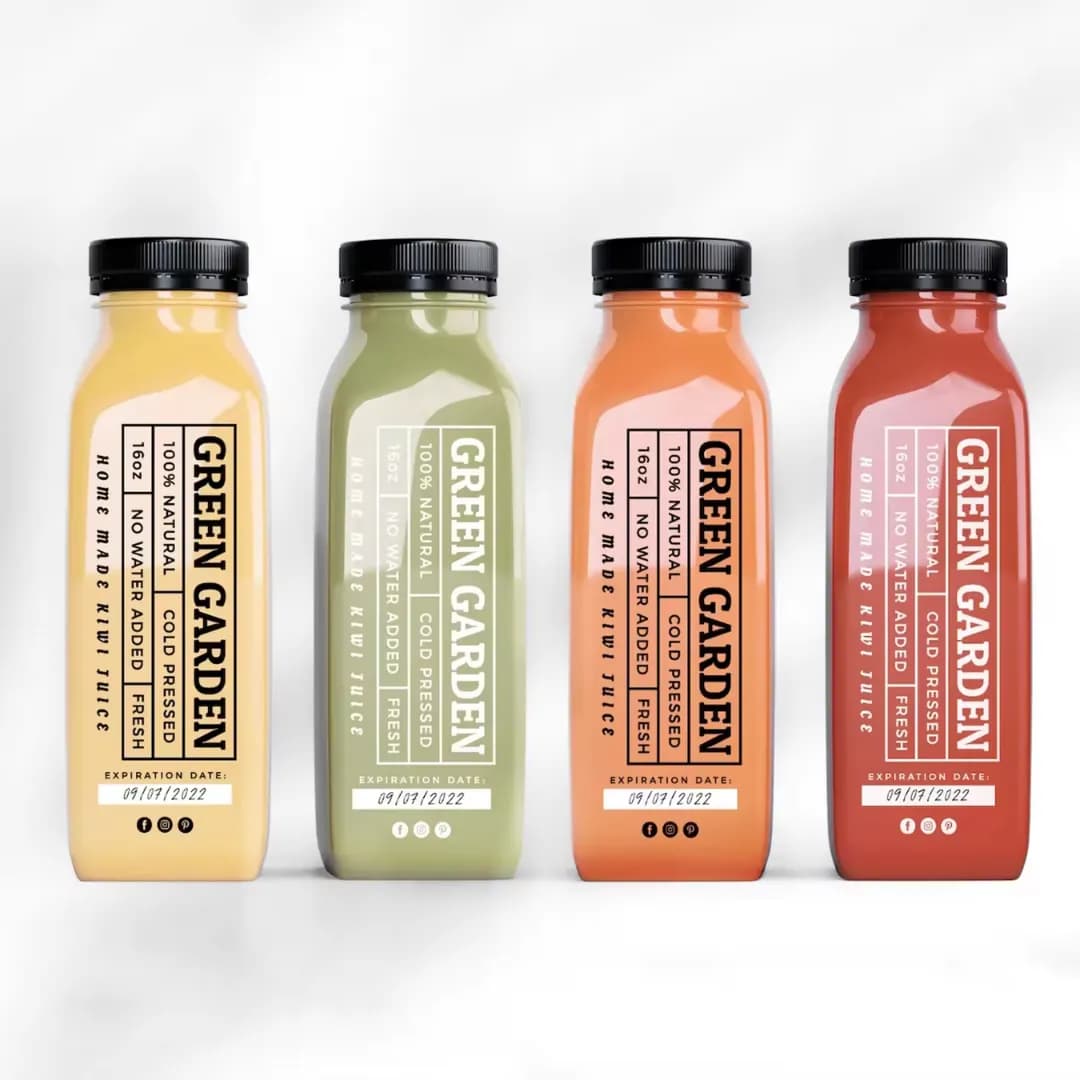
Beverage brands — cold drinks, craft water, juices and specialty beverages: Beverage labels on clear or frosted bottles benefit most directly from transparent sticker material. The design floats on the bottle surface, visible against the liquid through the glass, creating a label presentation that paper and vinyl stickers cannot achieve. For craft beverage brands, premium water labels, and artisan juice producers, the transparent label is both the appropriate material choice and the design decision that differentiates a premium product from a commodity at the retail display level.
Gift brands, luxury retail and premium packaging businesses: Brands that produce gifts, curated sets, and luxury retail products use transparent stickers on the outer packaging — box seals, bag closures, and ribbon labels — to add brand identity without disrupting the visual character of the packaging material. A transparent sticker seal on a kraft paper box, a white gift bag, or a printed tissue wrap adds a logo or brand mark without adding a rectangular white or coloured block. The packaging material remains the primary visual, and the brand identity is applied as a transparent overlay.
Material: Transparent gumming film — clear base, no visible background, adhesive backing
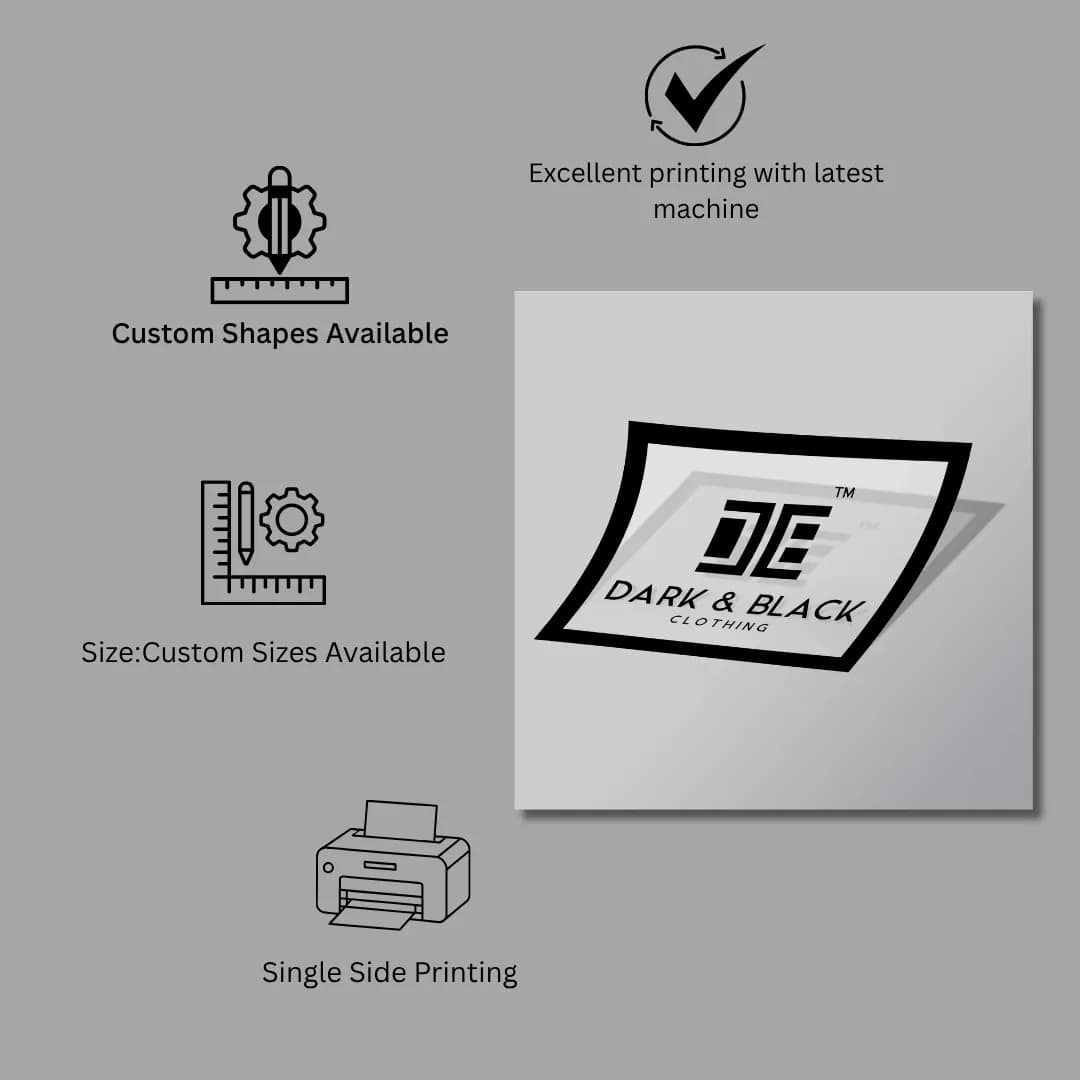
Printing: Single side · Advanced machine printing · Sharp detail, accurate CMYK colour
Shapes: Rectangle / Square / Circle / Oval / Custom Shape (die-cut to any outline)
Preset Sizes: 2×1 in · 3×2 in · 4×2 in · 4×3 in · 5×3 in · 5×4 in · 6×2 in (rectangular) · 2×2 in · 3×3 in · 4×4 in · 5×5 in (square) · Custom size available
Production Time: Varies by shape and quantity — confirmed at order stage
Shipping: Included · Pan-India delivery · Quantity-based pricing with automatic discounts
Bleed: Add 3 mm bleed on all sides beyond the final sticker size.
Safe zone: Keep all critical text and logos at least 3 to 5 mm inside the cut line.
Colour on transparent film: The transparent base has no white background — colours print directly onto the clear film. Avoid designs with large areas of white or very light colour, as these areas will appear transparent rather than white on the final sticker. For the best result, design with bold, saturated colours and solid fills. If white elements are essential to the design, consider switching to white vinyl or paper material instead. Ensure all files are in CMYK mode at 300 DPI before upload.
Custom shape files: For custom die-cut shapes, include a clearly labelled cut line layer in your file. The cut path should follow the design outline with a minimum 2 mm margin from any printed element to the cut edge.
File format: PDF (preferred), PNG, JPG · CMYK colour mode · Minimum 300 DPI · Convert all fonts to outlines before upload.
Skincare, serum and personal care brands with clear or minimal packaging
Artisan food brands — jams, honey, sauces, oils, and specialty beverages
D2C brands building premium unboxing and packaging experiences
Beverage brands on clear or frosted glass and plastic bottles
Gift brands, luxury retail and premium packaging businesses
Any brand that wants the design on the surface — with nothing else visible
